Drawing the forest, layer by layer
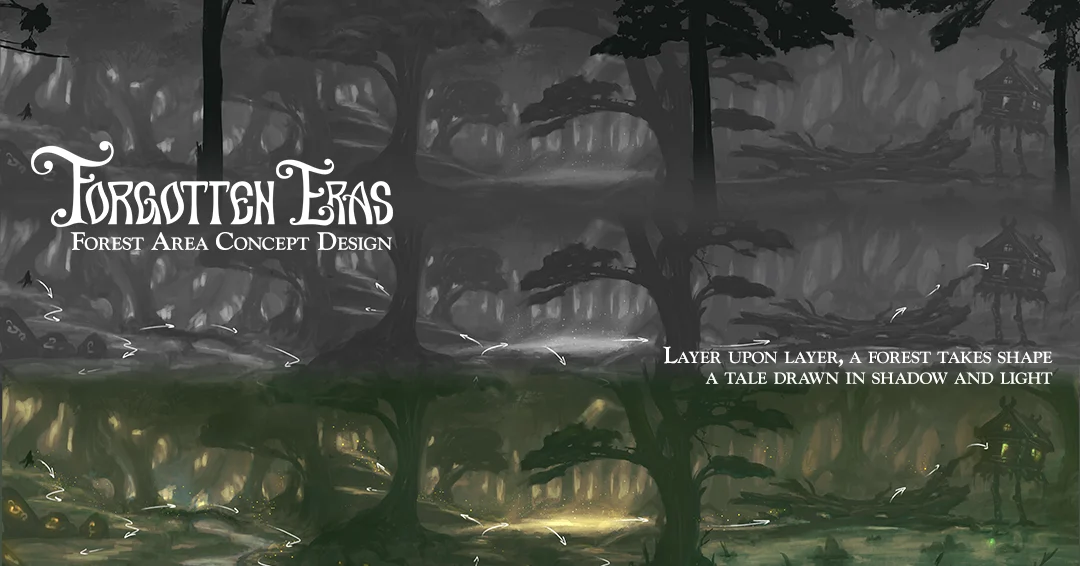
The forest is the first place Ivan sees when he wakes up, so it is where this look at our level art starts. The cover of this post is that painting in two states: the top half in grey, the bottom half in colour. Layer upon layer, a forest takes shape.
Grey first
A 2.5D world is built in layers that slide past each other as you move. The farthest trees are flat and pale, the next row a little darker, and the trees closest to the camera are almost black silhouettes. Before anyone chose a colour, the scene was worked out in grey values only, because if the depth does not read in grey, colour will not save it.
The white arrows on the sketch are the paths through the scene: where the light runs along the ground, where the eye goes, where Ivan can walk. A clearing of light sits in the middle. On the right edge, half lost in the trees, stands a hut on tall legs. You can guess whose.
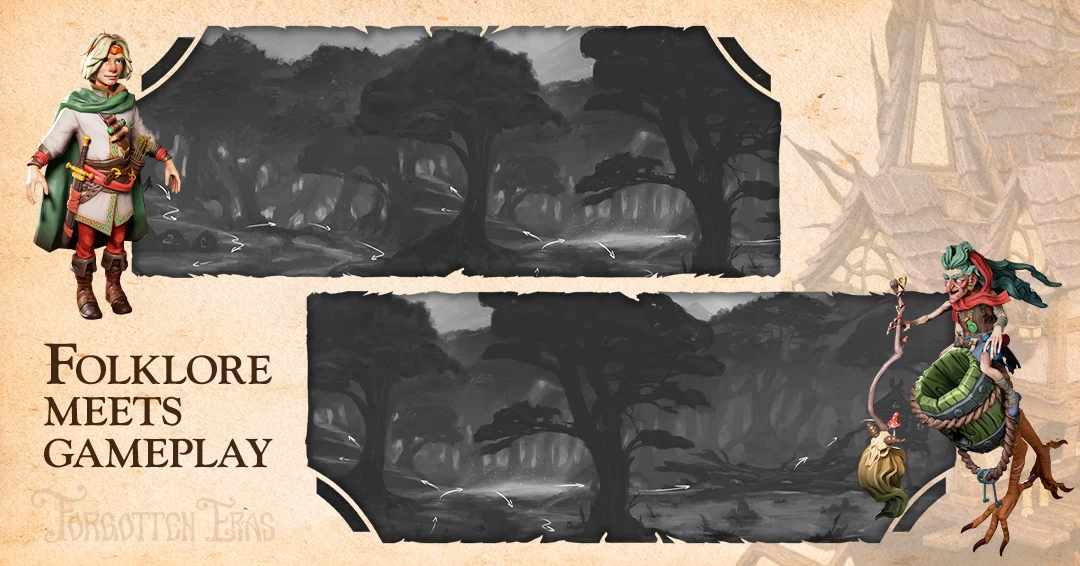
Folklore meets gameplay: two value sketches of the forest, with Ivan and Baba Yaga as they look in 3D.
Guide and foe
Every forest in the tales hides two kinds of creature, the ones who help and the ones who hunt you, and you rarely know which is which until it is too late. The forest area was painted to hold both. One scene shows the Grey Wolf in chains among standing stones carved with glowing runes, waiting for Ivan to set him free. Another drops down into a misty hollow of crooked graves and fallen markers, with a carved idol at its edge watching, and a small round face in the grass that anyone who knows the tale of Kolobok will recognise.
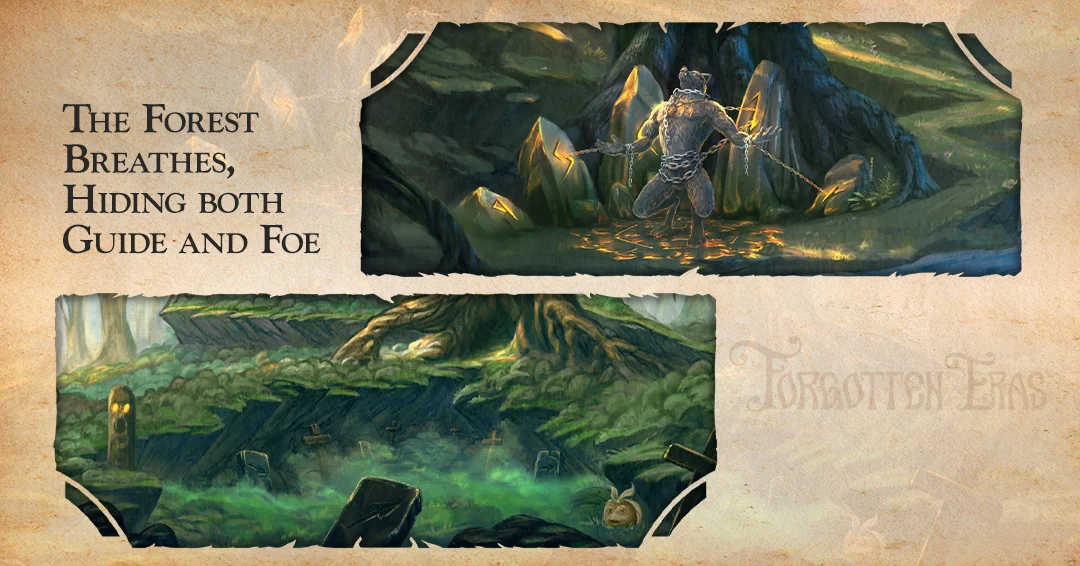
The forest breathes, hiding both guide and foe.
Where the painting went
The concept is the plan, and the game is where the plan has to hold up. This is the same forest in the current build, with Baba Yaga's hut standing among the trees.
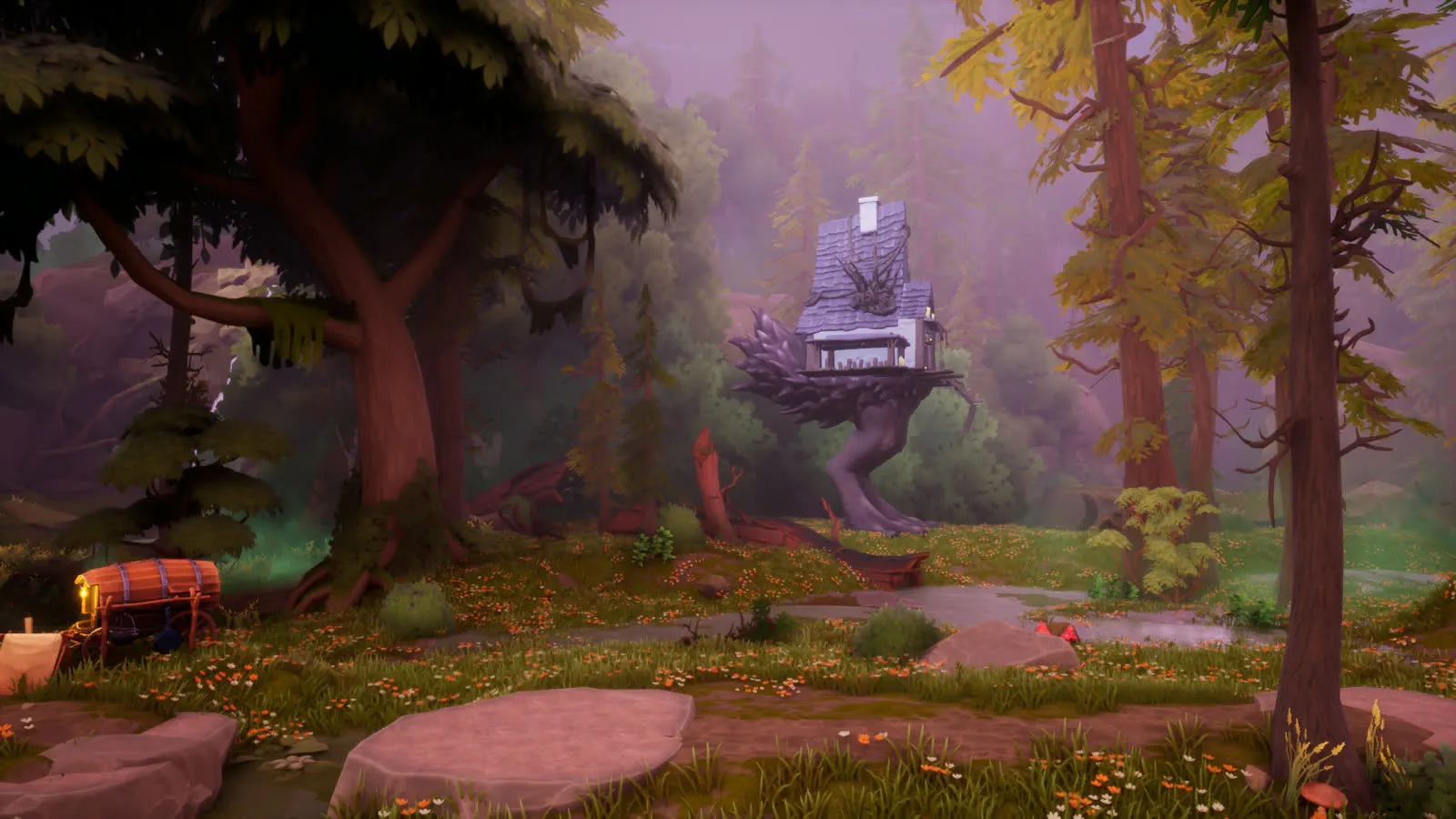
The forest in the current build.
The creatures who live here have their own articles: the Grey Wolf, Baba Yaga and her hut, and the Leshy idol that decides whether the paths open or close.