The Veela flower, a gift that carries risk
Some of the plants in Forgotten Eras help you and some of them try to kill you. The Veela flower is in the first group, mostly. Touch it and Ivan moves faster, fast enough to slip past obstacles that would stop him on foot. The catch is the glow. A Veela in bloom shines, and in a cursed forest, shining things get noticed.
The vila of the mountains
The flower is named after the vila, the nymph of South Slavic belief. In Serbia and Croatia she is the vila, in Bulgaria the samodiva. She lives in mountains, clouds, woods and springs, she dances in rings in the clearings at night, and the grass grows greener where she has danced. A vila could take a liking to a hero and help him in battle, as the vila Ravijojla helps Prince Marko in the Serbian songs. She could also blind a shepherd who stepped into her circle, or dance a young man to death.
The same belief travelled west. Heinrich Heine retold it as the legend of the Wilis, the ghosts of brides who dance men to death, and that story became the second act of the ballet "Giselle" in 1841.
Speed with a price
We wanted the flower to carry both sides of the vila. It gives Ivan speed and lightness, which is the blessing. Its light draws unwanted attention, which is the curse. Most of the time it is worth it, and some of the time it is not, and the player has to decide which time this is.
The way it moves came from the same place as the ballet. The flower sways the way the Wilis move in a performance of "Giselle" in St Petersburg: light, a little unreal, as if the stem were dancing.
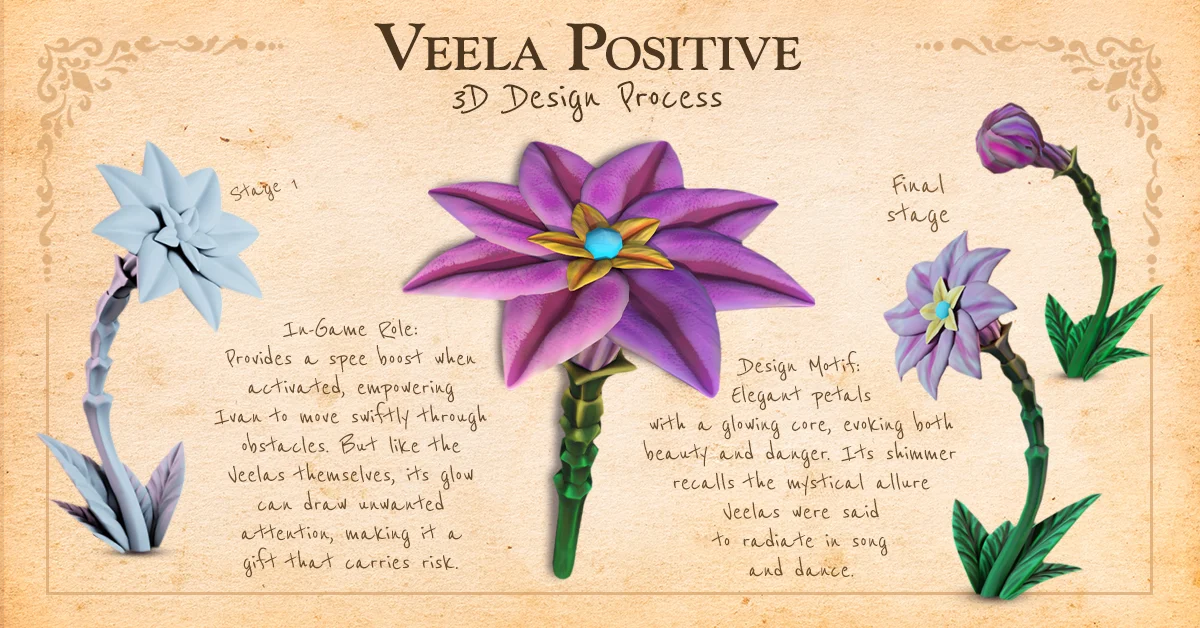
The Veela in 3D, from the grey first sculpt to the finished bloom with its glowing core.
From grey sketch to glowing core
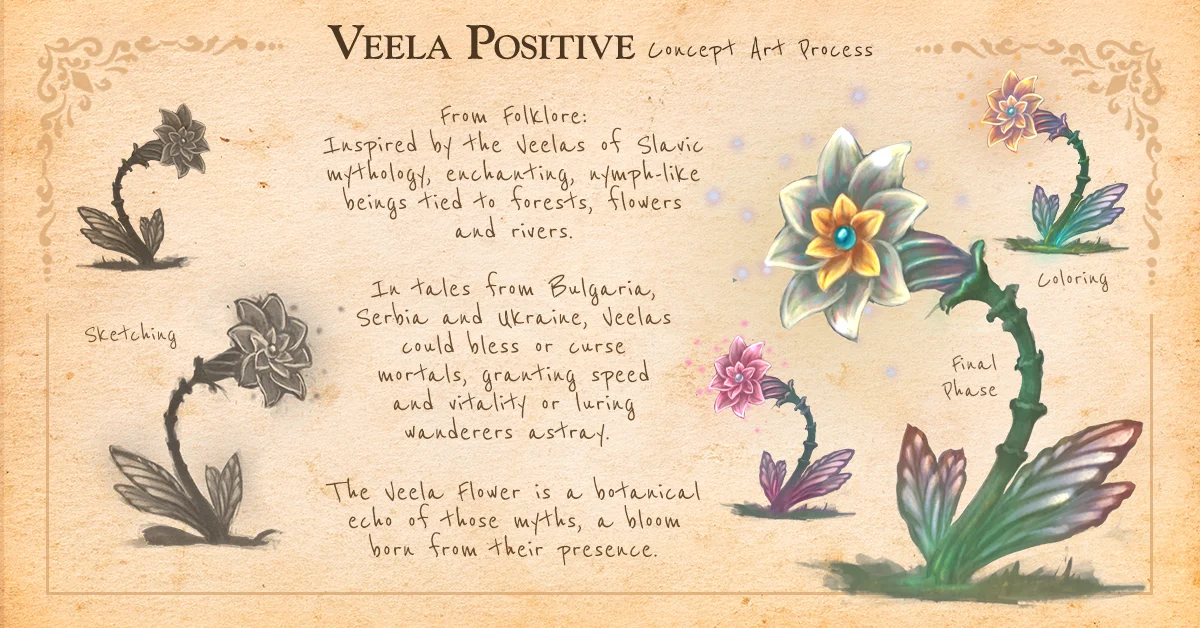
The concept sheet goes from loose grey brush sketches to a coloured bloom with pale petals, a gold star in the middle and a single blue gem at the heart. In 3D the petals turned purple and long, the stem got its knotted joints, and the blue core stayed exactly where the concept put it. The leaves at the base are shaped like wings, which is a small nod to the dancers.
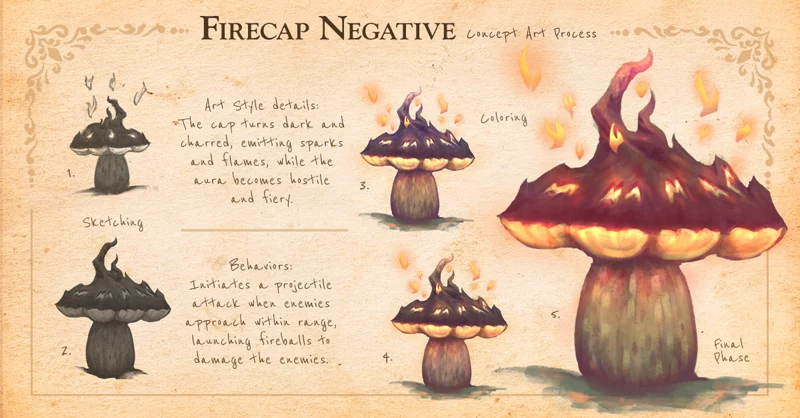
The same forest grows a mushroom that shoots fire. That one has its own article.
Sources: the Forgotten Eras design sheets for the Veela flower. Heinrich Heine, De l'Allemagne, 1835. Adolphe Adam, Giselle, Paris, 1841. The Serbian epic songs of Prince Marko, collected by Vuk Karadžić.